Trending

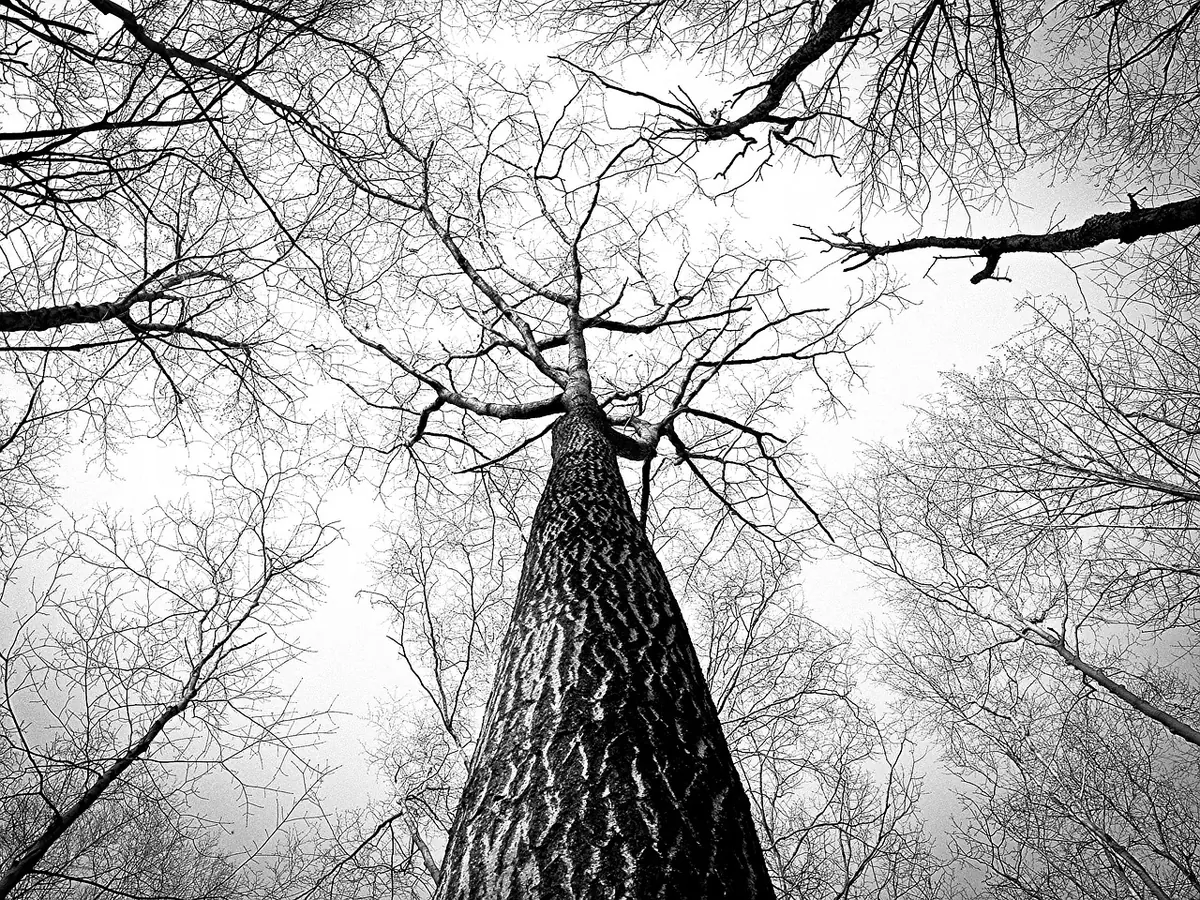
A larch in winter can fool you. The tree stands bare, its fine branches empty, looking more like a dead conifer than a living one. Yet larch is a conifer that sheds its needles every autumn. That makes winter a good time to learn its quieter clues: the bark on the trunk, the tiny buds on knobbly spurs, and the small cones that often cling to the branches.
Once you know those clues, a leafless larch becomes one of the most satisfying trees to identify. You are not relying on a blur of green needles. Instead, you are reading the skeleton: the texture of the trunk, the pattern of the twigs, and the woody remains of last year’s cones. It is a slower kind of looking, and it rewards patience.
Most conifers keep their needles through winter. Pines, spruces, firs, hemlocks, and cedars all offer a familiar silhouette of evergreen foliage. Larch does not. It is deciduous, which means it grows needles in spring, turns gold in autumn, and drops them. By midwinter, a larch can look almost skeletal, especially when viewed from a distance against gray sky or snow.
That bareness is the first clue. If you are in a cold, temperate, or boreal landscape and you see a conifer-shaped tree with no needles, larch should be near the top of your list. The next step is to confirm it with features that persist all winter: bark, buds, spurs, and cones. These are not as showy as spring needles, but they are reliable.
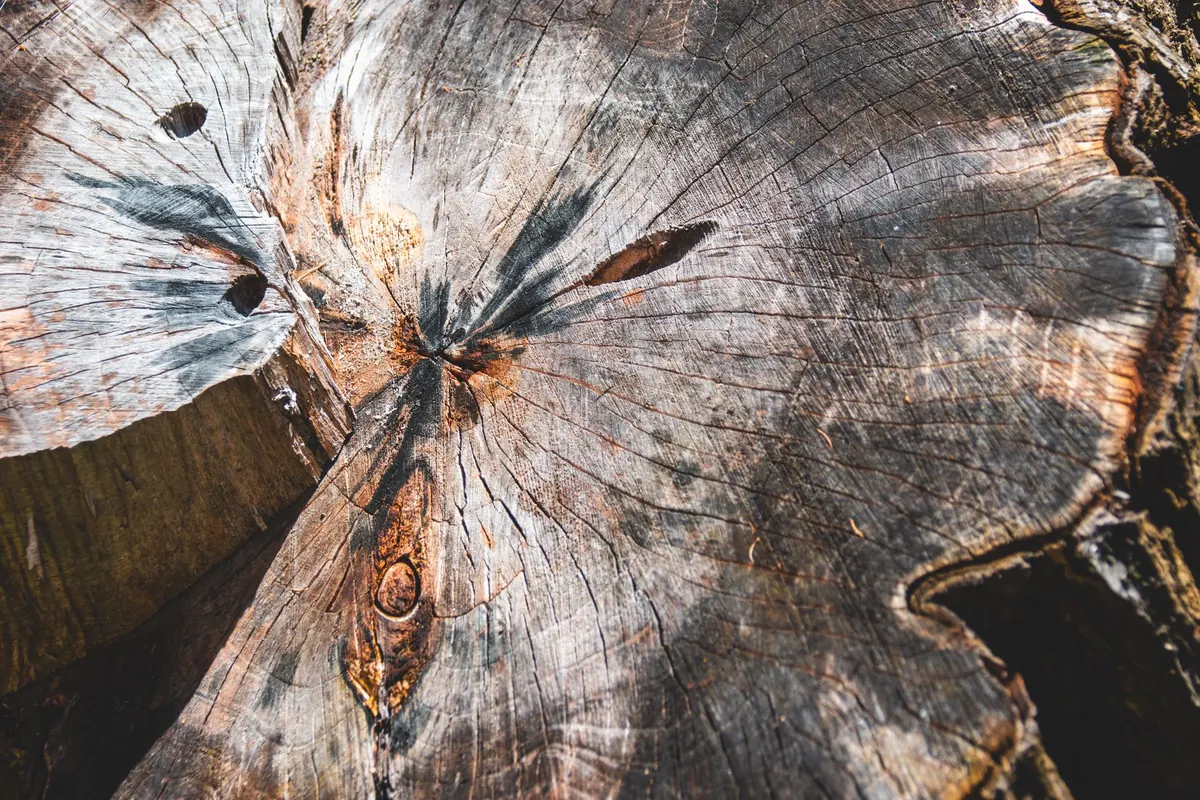
Larch bark changes with age. Young trees often have smooth, thin bark that is grayish-brown and sometimes slightly resinous. As the tree matures, the bark becomes rougher, scalier, and more deeply fissured. On old European larch and western larch, the trunk can develop thick, flat ridges separated by dark cracks. The inner bark, exposed where a plate has peeled away, is often reddish-brown or cinnamon-colored.
Species differences matter. European larch (Larix decidua) typically has gray-brown bark that becomes deeply furrowed with age. Japanese larch (Larix kaempferi) often shows more reddish-brown, scaly bark and is frequently planted in plantations. Tamarack, or eastern larch (Larix laricina), has thinner, grayer bark that peels in small scales. Western larch (Larix occidentalis) is known for thick, fire-resistant bark with deep furrows and a cinnamon-red cast. Subalpine larch (Larix lyallii) tends to have thinner, grayer bark and a gnarled, high-mountain habit.
Bark alone rarely proves a larch, but it narrows the field. Combine it with buds, spurs, and cones before you decide.
If bark is the broad story, buds and spurs are the fine print. Larch has two kinds of shoots. Long shoots grow quickly and carry single needles along their length. Short shoots, often called spurs, are stubby woody pegs that produce clusters of needles each spring. In winter, after the needles have fallen, those spurs remain. They give larch twigs a knobbly, bumpy texture that is very different from the smooth twigs of many other trees.
Look closely at the buds. Larch buds are small, rounded or egg-shaped, and often glossy reddish-brown to dark brown. Some are slightly resinous. They sit along the twig and at the tips, but they are not large and pointed like the terminal buds of many pines or spruces. On a larch spur, you may see a tiny bud surrounded by circular needle scars, a detail that becomes obvious with a hand lens.
The combination of knobbly spurs and small rounded buds is one of the most dependable winter clues. Even without cones, a bare branch can tell you that you are looking at a larch rather than a dead spruce or fir.
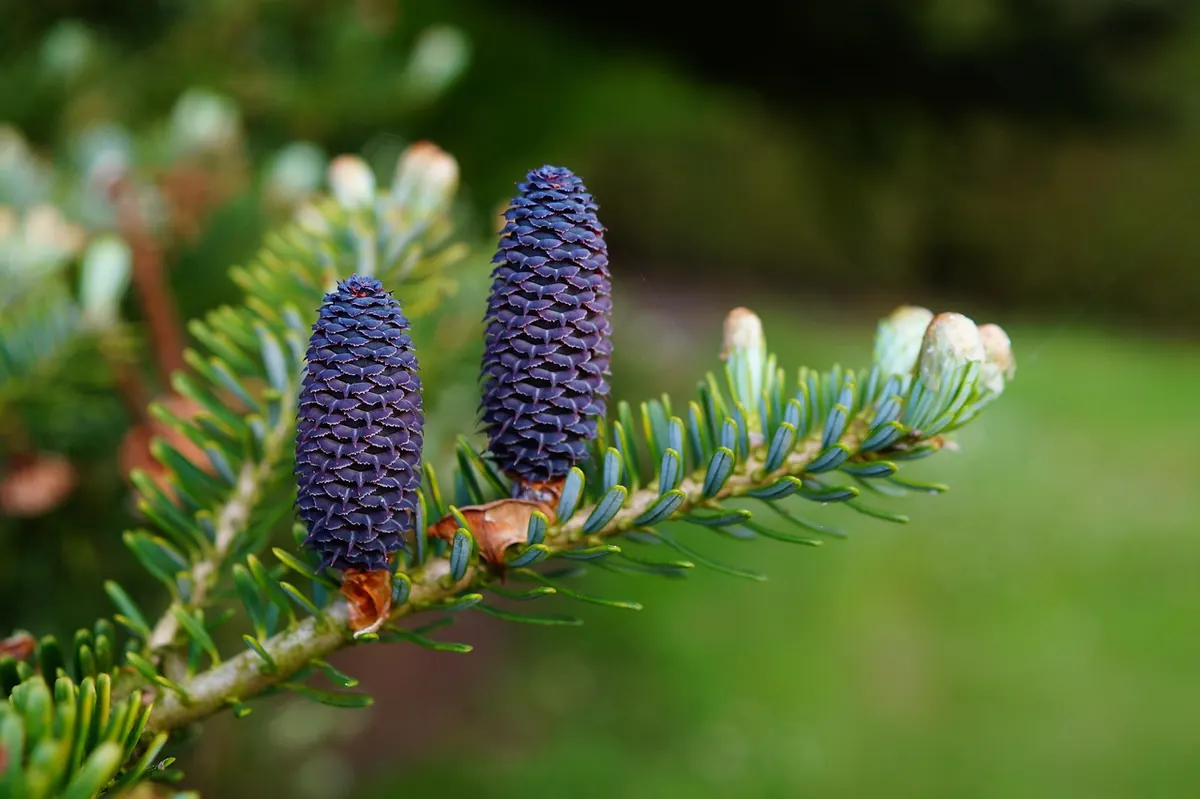
Larch cones are small compared with those of many conifers. Most are only about 1 to 4 centimeters long, depending on the species. They are egg-shaped to oblong, and they often persist on the branches for several years after releasing their seeds. In winter, you may find them empty and open, their scales spread apart like tiny wooden rosettes. They can be brown, gray-brown, or nearly black with age.
Because they cling to the twigs, cones are excellent confirmation. European larch cones are generally 2 to 4 centimeters long with scales that do not protrude far beyond the bracts. Japanese larch cones are similar but often have scales with a reflexed or wavy edge. Tamarack cones are smaller, usually 1 to 2 centimeters, and rounder. Western larch cones are larger, up to about 4 centimeters, with conspicuous bracts that stick out between the scales. Subalpine larch cones are also small and often purplish when young, turning brown as they mature.
Winter identification is mostly about elimination. If the tree still has needles, it is not larch. If it is bare and conifer-shaped, compare it with other deciduous conifers. Bald cypress and dawn redwood also lose their needles, but they usually grow in wetter, milder habitats, and their cones are rounder and larger. Dawn redwood has opposite buds and a more formal, conical shape. Bald cypress often has a swollen, buttressed trunk and “knees” rising from the soil around it.
Winter botany is a skill built by repetition. Visit the same larch through the season. In early winter, you may still find a few golden needles. By late winter, the cones and spurs stand out more clearly against the bare branches. Use a hand lens, a notebook, and a camera. Compare a larch with a nearby spruce or pine, and the differences will become memorable.
Be gentle. Do not peel bark from living trees or break off branches just to identify them. Fallen cones and twigs on the ground are enough for most study. In protected areas, leave everything as you found it. The goal is not to collect the tree but to learn its language.
A larch in winter is not an empty tree. It is a tree written in bark, buds, and cones—quiet clues that wait for a closer look.
Photo: RyanMcGuire / Pixabay